Condo or House in Gulf Shores? The Real Math Beyond the Price Tag
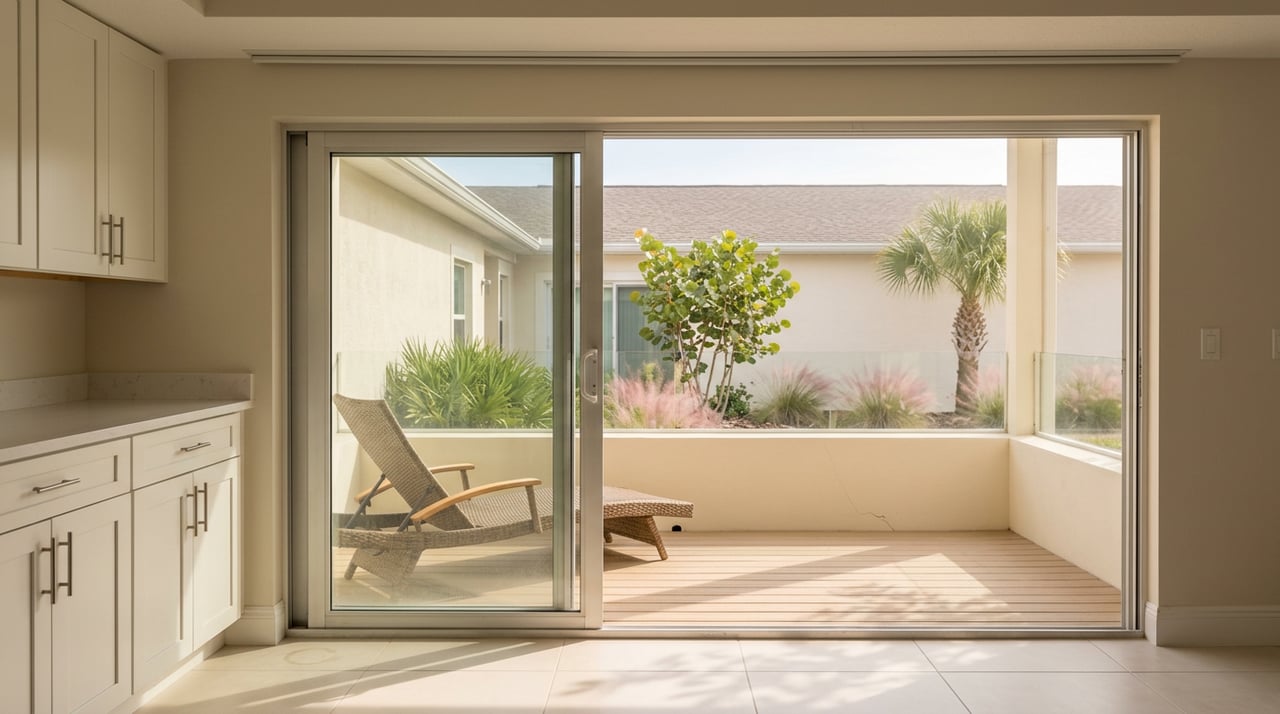
Two properties came up for showings the same week this spring: a two-bedroom unit in one of the Gulf-front towers on West Beach, and a four-bedroom house set back off Fort Morgan Road near Little Lagoon. Priced within a few thousand dollars of each other, both marketed to the same buyer, someone splitting time between a primary residence up north and a place to rent out most of the year. On paper, the decision looked like a coin flip. A year into ownership, it rarely plays out that way, and the reason has almost nothing to do with which one appreciated faster.
The gap opens somewhere else entirely: in the tax line the closing disclosure doesn't explain, in the shape of a rental calendar that isn't the same every month, in an insurance bill that lands on two different people depending on whether you own walls or a whole roof, and in a piece of paper Alabama doesn't require anyone to hand you before you sign. None of that shows up on a listing sheet. All of it shows up in year one.
Buyers moving into Baldwin County from Florida tend to arrive with a working assumption: Alabama is the cheaper state to own coastal property in, full stop. On property taxes, that assumption holds up well. The Short Term Shop estimates that a $400,000 property in Gulf Shores runs roughly $2,640 a year in property tax, compared with $4,000 to $6,000 or more for a comparable property in Destin or Panama City Beach. Over a ten-year hold, that gap compounds into real money.
Where the assumption gets shakier is on the operating side, if you plan to rent the property short-term. Gulf Shores stacks a state lodging tax, a state sales tax, county lodging tax, and city lodging tax on top of each other, and different trackers land on slightly different totals depending on how they group the pieces. One breakdown puts the combined rate at roughly 14.5 to 16 percent of gross rental revenue. STR City Regs lists it as a flat 16 percent split across a 4 percent state rate, 2 percent county rate, and 10 percent local rate. Either way, you land in the same neighborhood, and that neighborhood sits above Florida's typical combined rate of 11 to 13 percent. The state that's supposed to be the tax-friendly alternative is actually the more expensive one to operate a rental in, once the property starts earning.
That doesn't make Alabama the wrong call. It means the property tax savings and the rental tax cost pull in opposite directions, and which one wins depends entirely on how hard you plan to rent the place. A house you rarely rent out keeps the Alabama advantage intact. A unit you run as a full-time short-term rental gives some of that advantage back at tax time, every single booking.
The other number that gets misread is the annual revenue estimate itself. An average sounds like a plan you can budget against. It isn't, not here.
| Month | Average revenue per listing |
|---|---|
| July | $11,245 |
| June | $8,277 |
| March | $5,653 |
| January | $1,045 |
| December | $957 |
That's Rabbu's data across the market's roughly 1,588 active Airbnb listings as of April 2026, and the spread tells you something an annualized figure hides: this is a business with nearly a twelve-to-one swing between its best month and its worst. March gets a bump from spring break travelers. Summer carries the year. Winter barely covers utilities.
That shape matters more for some owners than others. If you're paying cash and treating the rental income as a bonus on top of a vacation home you'd own anyway, a slow January is a rounding error. If you financed the purchase and built a spreadsheet assuming the mortgage gets paid from rental income every month, January and December are the two months that expose whether the math actually works. A condo and a house face the identical seasonal curve. The difference is how much cushion each one leaves you when the curve dips.
Ask five agents what insurance costs in Gulf Shores and you'll get five different numbers, because the property type changes who's paying for what.
The average Gulf Shores homeowner pays around $4,159 a year for insurance, more than double the Alabama state average of roughly $1,800. Add flood coverage in one of the area's mapped high-risk zones, and NFIP's Risk Rating 2.0 currently prices that around $2,051 a year on its own. Named-storm deductibles run 1 to 5 percent of the insured value, so a $200,000 home could carry a deductible anywhere from $2,000 to $10,000 depending on the policy. One current Fort Morgan listing, a Gold Fortified new build directly on the Gulf, quotes $8,700 for homeowners coverage and $6,600 for flood, a useful data point for what a fully exposed beachfront house actually costs to insure today.
Condo owners split that bill differently. The association's master policy covers the building structure and common elements, and the owner carries a separate HO-6 policy for everything inside the unit. Budget $2,500 to $5,000 a year for a condo HO-6 policy versus $4,000 to $8,000 for a comparable single-family policy. On the surface, the condo looks cheaper to insure. It is, for your individual policy. What that comparison leaves out is the building's master policy, which you're already paying for through your HOA dues, and which is the harder number to see clearly before you own the unit.
FORTIFIED-certified construction, the standard that held up well through Hurricane Sally in 2020, can knock 20 to 30 percent off windstorm premiums on either property type. It's one of the few levers in this whole comparison that a buyer can actually pull.
Here's the piece that catches buyers coming from Florida off guard, usually in the opposite direction from what they expect.
The Florida Senate says Florida's post-Surfside reforms now require condominium associations to complete structural integrity reserve studies, with associations barred from waiving required reserve funding once those studies are done. It's a real backstop.
Propfusion says Alabama has no statewide statute requiring an HOA or condo association here to complete a reserve study or maintain a specific reserve balance. Most governing documents include reserve obligations on paper, and the same structural inspection pressure building in Florida is starting to show up in older Alabama towers too. Older towers can face expensive roof, elevator, or structural repairs, and the association's ability to fund those repairs without a special assessment is something you have to go find out yourself: the reserve study if one exists, recent board minutes, the current budget, and whether any assessment has already been approved but not yet billed. If one has, the smart move is spelling out in the contract exactly who pays it and when, rather than leaving it vague and hoping it sorts itself out at closing.
A house sidesteps this entirely. You're the only owner, so you're the only one deciding whether the roof gets replaced this year or next. That's a real advantage for a buyer who doesn't want their return on investment tied to a neighbor's vote at an annual meeting.
Even within the Gulf Shores area, the comparison changes by pocket. Fort Morgan, the long stretch of peninsula running toward the fort itself, sits at a median home price of $660,000 as of August 2026, with an average sale price closer to $788,464. Homes here spend an average of 156 days on the market, nearly three times a typical national figure. That's the tradeoff for the privacy and acreage the peninsula offers: bigger lots, longer sales cycles, and condo options like The Beach Club, a four-tower development that remains the largest condo project in the Gulf Shores area, alongside smaller, quieter buildings like The Rookery and Navy Cove Harbor on Mobile Bay. Gulf Shores Plantation, which sits next to Kiva Dunes Resort and Golf Community, mixes condos and single-family homes in the same semi-private setting.
Move closer to town and the inventory shifts toward the beachfront towers that dominate West Beach and the central beachfront corridor, buildings like Crystal Tower, Driftwood Towers, Island Royale, Surf Side Shores, Lighthouse, Island Tower, and Legacy. These sell faster, carry higher HOA dues tied to full-service amenities, and draw the heaviest short-term rental turnover in the market, which is exactly why their insurance and reserve questions matter more, not less.
Condo or house in Gulf Shores was never really a lifestyle question. It's a question about which frictions you'd rather manage yourself and which ones you'd rather delegate to an association, and whether your rental plan is aggressive enough that the tax and seasonal cash flow numbers actually bite. A house hands you full control and full responsibility. A condo hands off maintenance and exterior insurance, in exchange for reserve risk that Alabama doesn't require anyone to disclose on a fixed schedule.
Working through that tradeoff on a specific property, not a hypothetical one, is where a local team earns its keep. The Leigh McPherson Team has spent years walking buyers through exactly these numbers on both sides of the Alabama and Florida coast. If you're weighing a specific condo or house in Gulf Shores, Search All Homes on our site to see current listings, then let's run the real math on the one you're actually considering.
Does Alabama require condo associations to complete a reserve study? No. Unlike Florida, Alabama has no statewide statute mandating reserve studies or a minimum reserve balance for HOAs or condo associations, so this is diligence a buyer has to request directly rather than something guaranteed by law.
Is the combined short-term rental tax rate really higher in Alabama than Florida? Based on current tracking, Gulf Shores' combined state, county, and city lodging and sales tax on short-term rental revenue runs roughly 14.5 to 16 percent, compared with Florida's typical 11 to 13 percent combined rate. Alabama's lower property tax rate can offset this depending on how much of the year the property is rented.
Does Fort Morgan have different short-term rental rules than the rest of Gulf Shores? Fort Morgan sits outside both the Gulf Shores and Orange Beach city limits, in unincorporated Baldwin County, which means it isn't subject to either city's zoning restrictions on short-term rentals, though county and state tax obligations still apply.
This article is general information, not legal, tax or financial advice. Consult a qualified professional about your situation.
Stay up to date on the latest real estate trends.

Gulf Shores

Orange Beach real estate terms that help you buy a Gulf Coast home with confidence.
How to decide between an Orange Beach condo and a single-family home based on how you plan to live and use your Gulf Coast property.
How to create an Orange Beach coastal home that stays beautiful, holds up to salt air, and keeps its value for years.
Orange Beach kitchen renovation ideas that balance salt-air durability, Gulf Coast style, and everyday function.
What Sold
It is an honor to not only help dozens of clients buy or sell their properties but also see so many of their stories play out and get to be a part of writing a chapter. We strive to always take care of our clients with thorough communication, strategic negotiation skills, local contacts for specialized professions, area knowledge, as well as a touch of style and grace.