By the Leigh McPherson Team
The most impressive and memorable sunsets in Orange Beach happen in the fifteen minutes when the sky turns coral and the Gulf goes gold, and the last thing you want is a glaring overhead fixture washing all of it out. If your beach home in Orange Beach faces west toward the water, your lighting plan should do one job above all others: keep the eye pulled toward the horizon instead of competing with it. Too many waterfront homes are lit like showrooms, with every recessed can blazing at full strength while the most beautiful view in the state fades behind a wall of reflected glare.
The good news is that a few intentional choices can transform how your home feels at golden hour. Warm bulbs, well-placed dimmers, and light sources kept low and indirect will let the color outside pour in while your interiors glow softly around it. When you get this right, your living space and the sky beyond it stop competing and start working together.
Below you will find practical, room-by-room ideas for lighting a coastal home in Orange Beach so that every evening feels like a front-row seat to the show.
Key Takeaways
- Dimmable, warm-toned lighting on the west side of your home preserves sunset color instead of drowning it out with cool, bright interior light.
- Positioning fixtures low and indirect reduces window glare, so the glass reads as a clear frame rather than a mirror at dusk.
- Layering ambient, task, and accent light gives you control to dial interiors down as the sky lights up.
- Reflective surfaces, mirrors, and pale finishes can carry sunset color deeper into the home when placed thoughtfully.
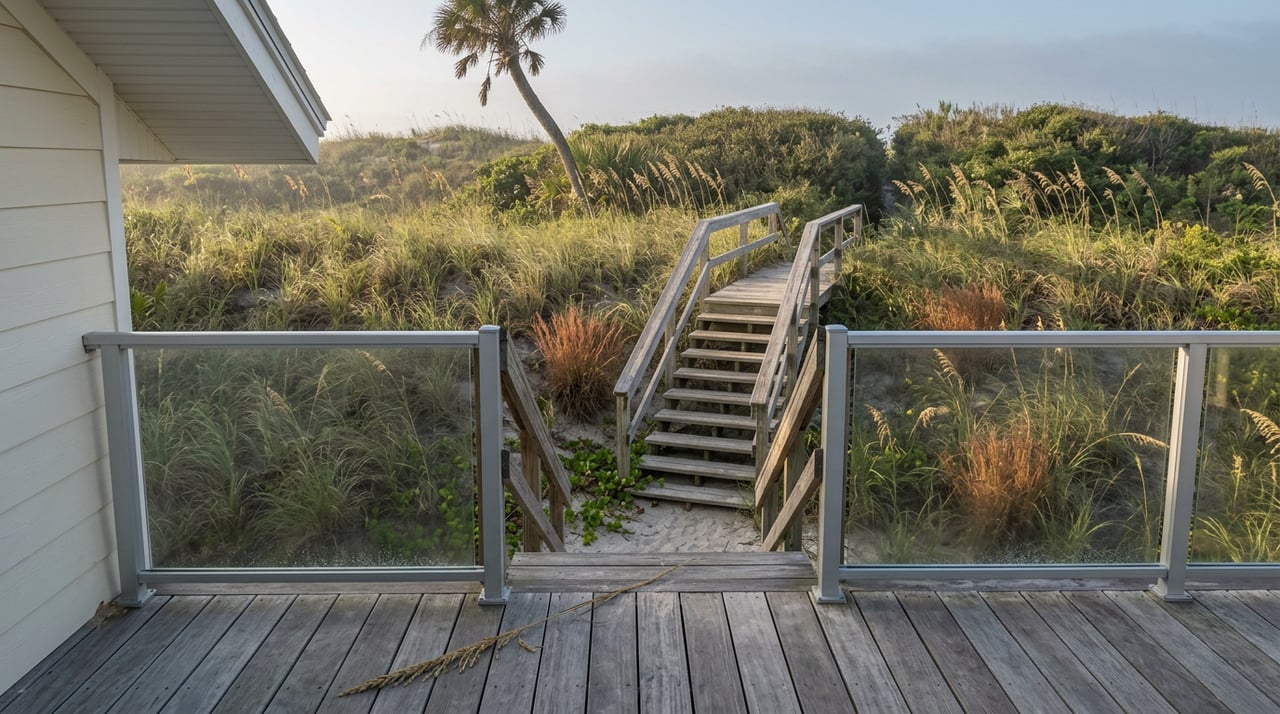
- Outdoor lighting on decks and balconies should stay subtle, so it extends the view rather than blocking it.
Why Does Interior Lighting Wash Out a Sunset View?
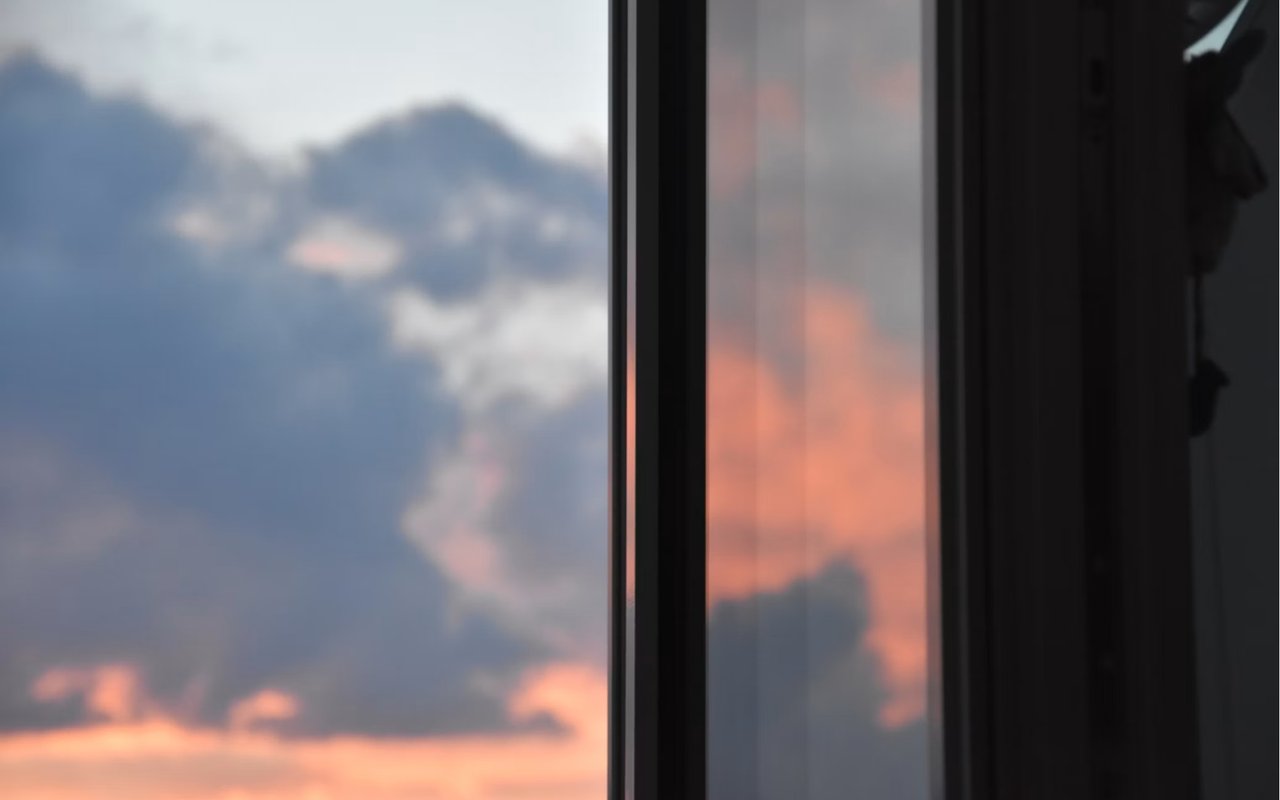
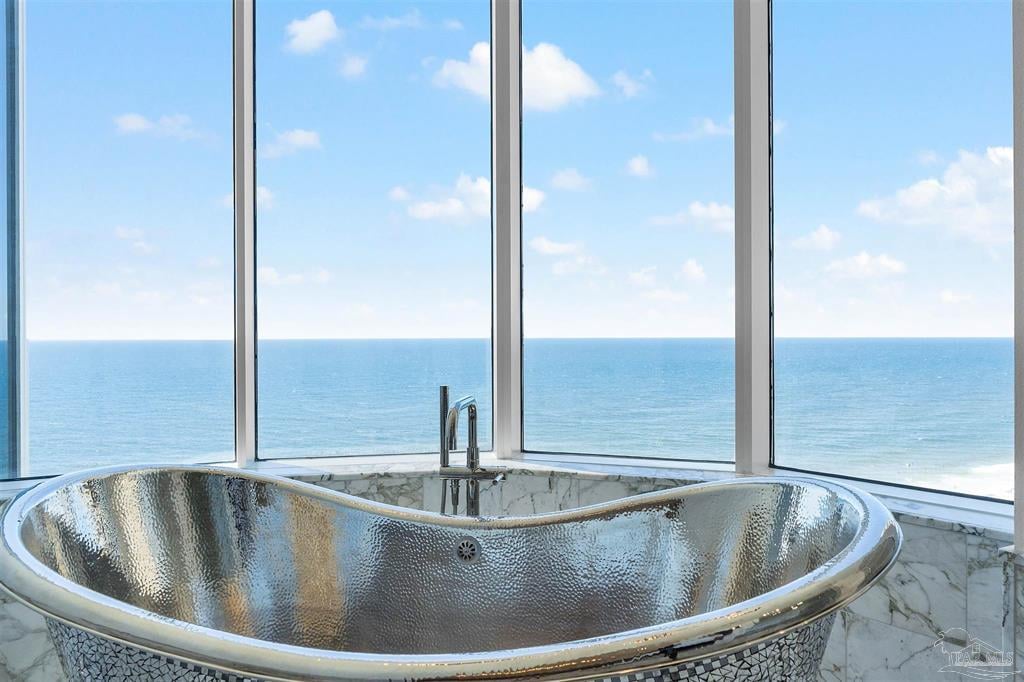
Interior lighting washes out a sunset because bright, cool-toned bulbs turn your west-facing windows into mirrors the moment the sky outside starts to dim. As daylight fades, the difference between the light level inside your home and the light level outside grows sharply. When your interior is far brighter than the horizon, the glass reflects the room back at you instead of framing the Gulf. This is the single most common reason a stunning waterfront view disappears at exactly the hour it should be at its best.
A sunset lives in the warm end of the spectrum, all amber, rose, and gold. If your recessed lights are pushing cool white or daylight-balanced bulbs into the same room, the contrast flattens the warm tones your eye is trying to enjoy. The sky reads as muddy rather than vivid. Warm bulbs in the 2200K to 2700K range echo the sunset's own palette, so the transition from indoor to outdoor light feels seamless.
The fix is control, not darkness. You do not need to sit in the dark to enjoy the view; you need the ability to bring your interior light level down to meet the fading sky as it falls.
How To Balance Indoor And Outdoor Light
- Install dimmers on every fixture within sight of your west-facing windows, so you can lower interior brightness gradually as the sun drops.
- Choose warm bulbs in the 2200K to 2700K range for any room that faces the water, since cool light fights the sunset's color.
- Keep the brightest light sources away from the glass itself, because a bright fixture near a window guarantees reflection at dusk.
- Turn off or dim overhead cans first, then rely on lower lamps to keep the room usable without overpowering the view.
Where Should You Place Fixtures To Reduce Window Glare?
The best place for fixtures in a water-facing room is low and toward the interior walls, well away from the glass, where the light bounces off surfaces rather than shining directly at the windows. Glare comes from any bright point that the window can reflect, so the goal is to eliminate strong, high sources near the view and replace them with gentle, indirect light deeper in the room. Table lamps, floor lamps, and wall sconces aimed at a wall or ceiling all produce a soft wash that never mirrors back at you.
Recessed ceiling lights are the biggest offenders in most coastal homes in Orange Beach because they sit high and point straight down, creating hot spots that windows reflect. If you cannot relocate them, put them on their own dimmer and pull them down to a low glow at sunset while your lamps carry the room. Uplighting is another great choice here; a fixture that throws light up a wall or into a coffered ceiling adds warmth without ever appearing in the window's reflection.
Think about the geometry of your evenings. Where do you actually sit to watch the sunset? Light the path to that spot and the seating around it, then let everything between you and the water stay dim. That single principle will do more for your view than any expensive fixture.
Fixture Placement Tips
- Position lamps and sconces on interior walls, so their light travels away from the windows rather than toward them.
- Favor fixtures that wash the light onto walls and ceilings, since indirect light rarely reflects in glass.
- Keep any fixture within a few feet of a west-facing window on a separate dimmer for independent control.
- Use the seating area where you watch sunsets as your anchor, lighting it just enough to be comfortable.
How Do You Layer Light In A Coastal Living Space in Orange Beach?
You can layer light in a coastal living space by combining three types, which are ambient, task, and accent, and giving each one its own control so you can shift the balance as the light outside changes.
Ambient light is the general glow that fills the room, task light serves specific activities like reading or cooking, and accent light emphasizes features, including artwork or architectural details. When all three sit on the same switch, you lose the flexibility that a waterfront home in Orange Beach needs. When they are separated, you can drop ambient light to almost nothing at sunset while keeping a single reading lamp on.
This layered approach matters most during the transition hours. An hour before sunset, you might run everything at moderate brightness. As the color builds, you dim the ambient layer and let the sky take over, keeping only the task and accent lights that you need. After dark, you bring the accent layer back up to give the room depth and a warm, welcoming feel. The room adapts to the hour instead of working against it.
Coastal interiors tend toward pale walls, light woods, and airy finishes, all of which help this system work. Soft surfaces bounce warm light around gently, so a little goes a long way. You will often find that once the layers are in place, you use far less total light than you expected, and the room feels richer for it.
Top Considerations For Layering
- Give ambient, task, and accent lighting separate controls, so you can adjust each independently as the sky changes.
- Lean on lamps and accent fixtures at sunset, and reserve ambient overhead light for cloudy days or full dark.
- Choose warm bulbs consistently across all three layers, so the room reads as one cohesive glow.
- Let pale coastal finishes do part of the work, since light surfaces amplify a modest amount of warm light.
FAQs
What Color Temperature Is Best For Sunset Views?
The best color temperature for a sunset-facing room is warm white in the 2200K to 2700K range, because it mirrors the amber and gold tones of the sky and creates a seamless transition from indoor to outdoor light. Cooler bulbs in the 3500K range and above introduce a bluish cast that clashes with the sunset's warm palette and makes the view look washed out. Sticking to warm bulbs throughout your water-facing spaces keeps everything cohesive.
Should I Use Overhead Lighting At Sunset?
You should dim or turn off overhead lighting at sunset, since recessed cans and ceiling fixtures sit high and create the reflections that turn your windows into mirrors. Rely on lower light sources, such as table lamps, floor lamps, and sconces, during golden hour and then bring overhead light back up gradually after dark if you need it. Keeping overhead fixtures on their own dimmer gives you this flexibility without rewiring anything.
How Can I Light A Deck Without Blocking The View?
You can light a deck without blocking the view by keeping fixtures low, warm, and pointed downward, so they illuminate the surface you walk on rather than the horizon you came to see. Recessed step lights, low path lights, and shielded railing lights all provide gentle guidance without creating bright points that compete with the sky. Avoid tall, bright fixtures on the water side of the deck, because they will sit directly in your sightline at sunset.
Do Dimmers Really Make A Difference For A Water View?
Yes, dimmers make a dramatic difference for a water view, because they let you lower your interior light to match the fading sky, which is the key to keeping your windows clear instead of reflective. Without dimmers, your only options are fully on or fully off, neither of which suits the gradual change of golden hour. Adding dimmers to the west-facing rooms in your Orange Beach home is one of the simplest and most effective upgrades you can make.
Let the Gulf Do the Talking
Lighting a beach home for sunset views comes down to a single principle: your interior should support the sky, never compete with it. When the light level inside your home falls in step with the fading light outside, the coral and gold of an Orange Beach sunset pours straight into your living space, and the view becomes the centerpiece it was always meant to be.
If you are searching for a waterfront home in Orange Beach that captures these evenings, or preparing to sell one and want it to shine at golden hour, we would love to help. The
Leigh McPherson Team knows the Orange Beach real estate market inside and out, and we understand exactly what makes a coastal home feel luminous and inviting to buyers.