Buying a Perdido Key Condo for Vacation Rental Use
Wondering if a Perdido Key condo can be both a relaxing beach getaway and a smart vacation-rental purchase? That is the question many buyers ask when they start comparing Gulf-front towers, HOA fees, insurance costs, and rental rules. If you want a condo that works well for your personal use and has solid short-stay appeal, the details matter. Let’s dive in.
Perdido Key has a very specific coastal setup that shapes its condo market. Escambia County describes it as a narrow barrier island that stretches about 16 miles, with nearly 60 percent of the area in federal or state park land. That limited land pattern helps explain why so much of the market centers on condos, resort communities, and amenity-rich buildings.
For you as a buyer, that matters because vacation-rental demand often follows convenience and experience. In Perdido Key, many condo communities are designed around beach access, balconies, pools, and easy lock-and-leave ownership. That can make condos more practical than larger properties that require more hands-on care.
Not every condo floor plan performs the same way for short-term guests. In Perdido Key, common layouts range from one-bedroom units with hallway bunks to larger three-, four-, and even five-bedroom residences. There are also villa and townhome options in communities like Lost Key.
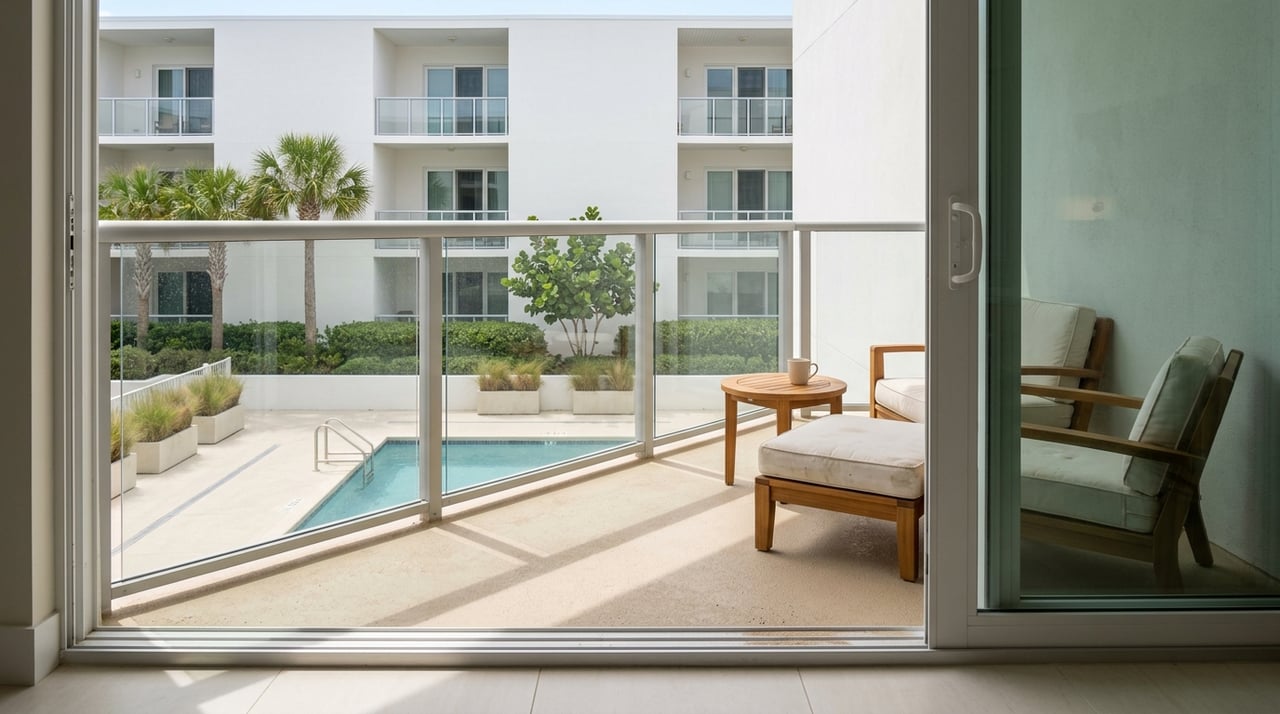
Features that show up again and again in marketable units include open living and kitchen areas, Gulf-facing balconies, and in-unit laundry. Those details can improve the guest experience and make the condo easier to market for shorter stays. Larger balconies and direct water views can also be a meaningful part of a unit’s appeal.
A condo may look beautiful online but still be a weaker rental fit if the layout is awkward. You want to think about how easily a group can sleep, cook, store beach gear, and move through the unit. A simple, functional layout often holds up better than a flashy design that feels cramped.
If you plan to use the condo yourself part of the year, think about your own needs too. The best purchase is usually one where your personal lifestyle goals and the rental setup are aligned rather than fighting each other.
Before you get attached to a specific unit, confirm whether the condo can actually be used the way you intend. In Florida, the Department of Business and Professional Regulation says that if you rent an entire unit more than three times in a calendar year for periods of less than 30 days, or advertise it as regularly rented to guests, you generally need a vacation-rental license.
For condo units, that license can fall under the Vacation Rental Condominium category. DBPR also requires licensed vacation rentals to display current licenses, maintain clean and safe conditions, and meet certain additional requirements depending on the property setup.
If you operate a vacation rental in Escambia County, you also need to look at local business requirements. Escambia County says businesses in the county need a Business Tax Receipt, which is renewed annually from July through September. The current fee is $26.25, and the tax collector warns of a $250 fine if you do not maintain a current receipt.
This is one of those small details that can create unnecessary headaches if you miss it. It is worth confirming your license and county requirements early so you can budget your setup costs and avoid delays.
Association rules are just as important as state and county requirements. Some buildings are much more vacation-rental friendly than others, and the difference can directly affect your income plan.
For example, The Beach & Yacht Club at Perdido Key has a three-day minimum in the off-season and weekly-only stays from May 16 through September 10. It also has occupancy limits and rules about balconies, grills, pets, smoking, and beach-item storage. A condo may be attractive on paper, but if the association rules do not match your rental strategy, it may not be the right fit.
Many buyers start with the purchase price and projected income. That is understandable, but the stronger approach is to model the full cost stack before you make an offer.
For a Perdido Key condo, your budget should usually include:
HOA dues can feel high in amenity-rich coastal buildings, but they often cover a lot. In one current Perdido Key listing, the HOA includes association costs, grounds maintenance, insurance, management, recreation facilities, trash, and water and sewer. That can simplify ownership, but you still need to know what is and is not included.
Escambia County collects ad valorem taxes annually beginning November 1, and taxes become delinquent April 1. The county also notes that non-ad valorem assessments in unincorporated Escambia County may include charges for services like fire protection, rescue, street lighting, road paving, retention pond, and solid waste.
When you review estimated carrying costs, make sure you ask for a full picture of both tax categories. That helps you avoid underestimating annual ownership costs.
Short-term rentals also come with tax collection responsibilities. The Florida Department of Revenue says counties may levy local option transient rental taxes on accommodations in condos and other lodging for terms of six months or less, in addition to state sales tax.
You do not want to discover those obligations after closing. If the condo is part of your investment plan, rental tax handling should be part of your due diligence from the start.
On the Gulf Coast, insurance is never a minor line item. Florida’s Chief Financial Officer says condo unit owners generally need an HO-6 policy, which primarily covers personal property and liability. That policy must also include at least $2,000 of loss-assessment coverage with a deductible no greater than $250.
That is only the starting point. You also need to understand what the association master policy covers versus what you must insure yourself inside the unit.
Flood coverage is separate from a standard homeowners policy. Florida’s CFO says homeowners policies do not cover flood damage, and FEMA says flood insurance is separate. For condos, flood coverage usually applies to the unit interior, while contents coverage is generally purchased separately.
Hurricane deductibles also deserve close attention. Florida guidance says insurers must offer hurricane deductible options of $500, 2 percent, 5 percent, or 10 percent of dwelling or structure limits in many cases, and that deductible can apply to covered hurricane losses in a calendar year. On a coastal condo, that can be a meaningful out-of-pocket risk.
Some policy details are easy to miss until you need them. Florida’s CFO notes that sewer-backup coverage may be excluded unless added by endorsement. If you plan to rent the condo, you also want to ask whether your policy setup fits short-term rental use and what liability protection is available.
These are not glamorous questions, but they are important ones. A condo that looks affordable at first glance may feel very different once insurance costs and deductibles are fully understood.
Once you buy, you need a plan for how the rental will actually operate. In this market, owners often choose between self-management, full-service local management, or a hybrid model.
Your best fit depends on how involved you want to be and how far you live from Perdido Key. If you are an out-of-area buyer, the practical side of cleaning coordination, maintenance response, guest communication, and scheduling can be a bigger factor than expected.
A few smart conversations can help you avoid expensive surprises later. Consider reviewing these topics before you move forward:
This is where many strong purchases are won or lost. A condo is not just a beach property. It is also an operating system with rules, expenses, and risk layers that need to work together.
In Perdido Key, the strongest vacation-rental condo candidates are usually the ones that combine guest-friendly design with manageable ownership costs. You want a unit that checks the big boxes without creating friction every step of the way.
A strong candidate often has:
That does not mean every buyer should chase the biggest unit or the flashiest tower. Sometimes the better fit is the condo with the simpler rules, easier maintenance profile, and steadier path to ownership.
Buying a Perdido Key condo for vacation rental use should feel exciting, but it should also feel informed. When you understand the rules, costs, and day-to-day realities before you buy, you are in a much better position to choose a property that supports both your lifestyle and your long-term goals. If you want help comparing condo options in Perdido Key with a practical coastal lens, reach out to Leigh McPherson.
Stay up to date on the latest real estate trends.

Cozy Spots, Local Brews, and Beachside Espresso Breaks That Hit the Spot.

Where to Stay Active Indoors and Outdoors Along the Alabama Coast.

Understanding the benefits, limitations, and local relevance of a home warranty in Orange Beach, Alabama.

Practical guidance for Orange Beach homeowners seeking to protect their property from structural damage and costly repairs.

Protecting Your Investment With the Right Knowledge.

Luxury Market Insights
Durable, Beautiful Flooring Built for Coastal Living in Orange Beach.

Luxury Market Insights
It is an honor to not only help dozens of clients buy or sell their properties but also see so many of their stories play out and get to be a part of writing a chapter. We strive to always take care of our clients with thorough communication, strategic negotiation skills, local contacts for specialized professions, area knowledge, as well as a touch of style and grace.